
In the Klamath Mountains, communities can be separated by long drives, winding rivers, mountain passes, and county lines. Young people may live relatively close to one another yet have few opportunities to meet, explore the region together, or discover the range of careers available close to home.
For the Bigfoot Trail Alliance and its regional partners, changing that story began in 2020.
From Youth Stewardship to a Regional Network
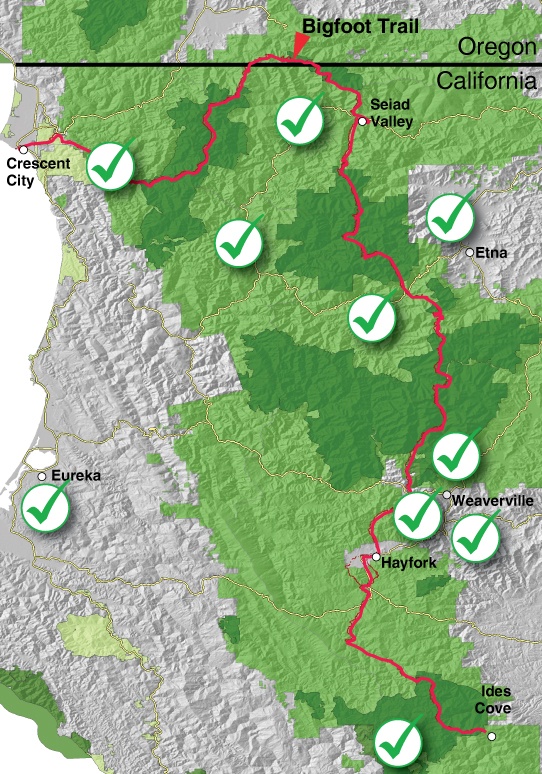
With support from the S.H. Cowell Foundation, the Bigfoot Trail Alliance began expanding its youth stewardship work in 2020. The idea was simple: connect young people with the landscapes of the Klamath Mountains through meaningful, hands-on experiences.
Trail work was an important starting point. But as the program grew, so did the vision.
Across the region, watershed councils, Tribal natural resource departments, conservation organizations, educators, and wilderness programs were already doing remarkable work with young people. By working together, we realized we could offer youth something much larger than any one organization could provide.
That collaboration has evolved into today’s Klamath Mountains Workforce Training Network, connecting young people ages 15–24 with hands-on experiences, professional mentors, and pathways into natural-resource careers.
Learning by Doing
The Network is built around real experiences in real places. Participants have restored streams, built beaver dam analogs, surveyed salmon habitat, learned GIS and mapping, worked on trails, explored forests, and learned alongside scientists, restoration practitioners, Tribal natural-resource professionals, educators, and outdoor leaders.
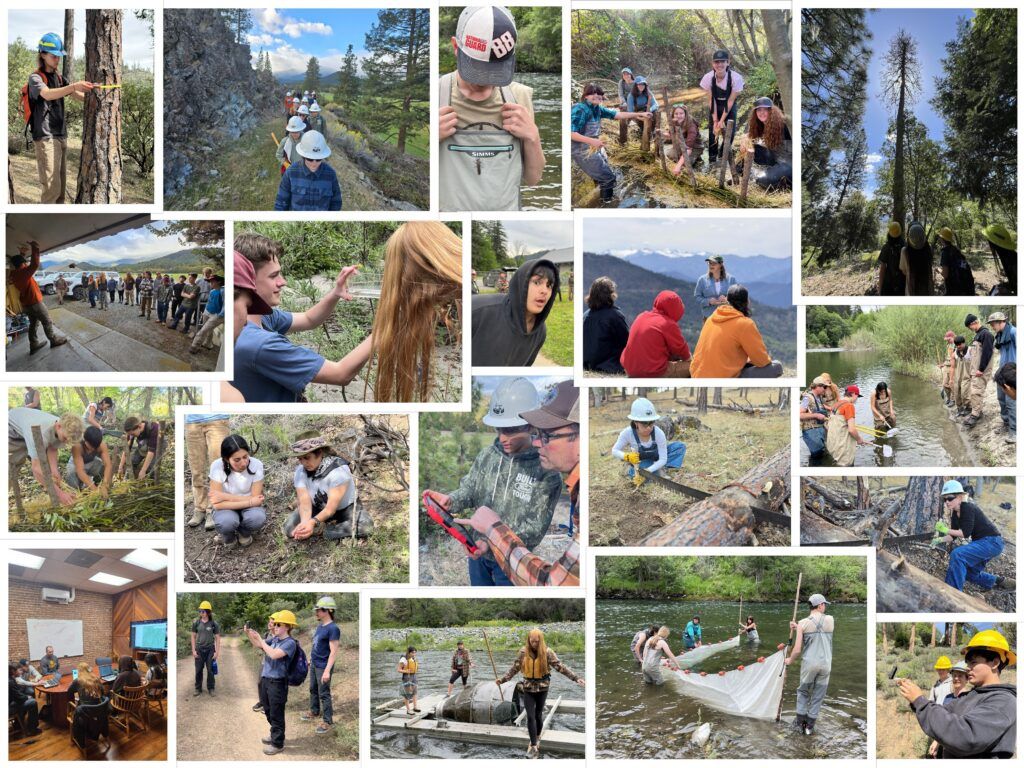
And those experiences are beginning to shape what comes next.
One participant’s experience helped lead to a GIS job. Others have gone on to work for CAL FIRE, pursue internships and additional training, or seek letters of recommendation for college and employment.
Another young person entered the program thinking about forests primarily through the lens of timber harvest. After learning about forest ecology and participating in restoration, he came away seeing the forest as an interconnected living system.
Parents are noticing changes too—greater confidence, maturity, curiosity, and a stronger relationship with the landscapes surrounding their communities.
As one reflection put it:
“Connecting youth and professionals from different Klamath Mountain communities brings us all together into a less fragmented ecosystem.” — Lyra Cressy, Salmon River Restoration Council
Stronger Together
That idea extends beyond the youth themselves. The Network is also strengthening connections among organizations throughout the region.
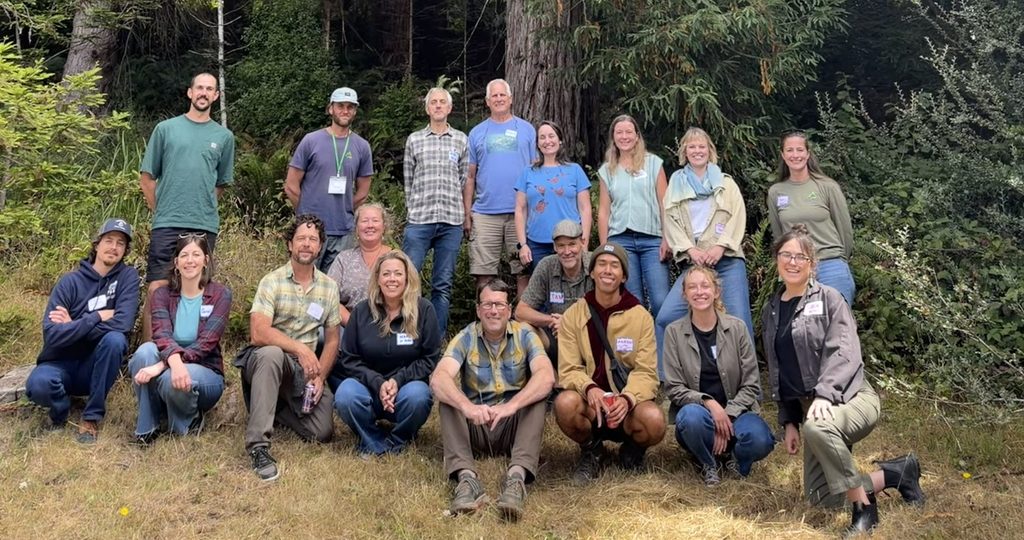
Partners share staff, knowledge, equipment, interns, ideas, and opportunities. Relationships created through the Network have led to new grants, shared programs, co-led trips, and expanded youth programming.
For the Karuk Tribe’s Natural Resources Department, the Network has also created time and capacity to share professional knowledge with young people.
“Through the program, I have had the opportunity to develop and practice sharing knowledge, teaching Tribal youth GIS and forestry skills—which is a major guiding objective for our division that is often hard to prioritize in our day-to-day tasks.” — Judson Fisher, GIS Coordinator, Karuk Tribe Natural Resources Department
Perhaps most importantly, youth from different communities are meeting one another. Geographic, cultural, and social boundaries begin to soften when young people work side by side restoring a stream, clearing a trail, collecting data, or sitting around a camp together at the end of the day.
Creating Pathways Close to Home
The Workforce Training Network is ultimately about showing young people that there can be a future for them here.
Forestry, fisheries, fire, GIS, restoration, recreation, conservation, Tribal natural resources, environmental education, and public-land management can seem abstract until a young person meets someone doing that work—and then gets a chance to try it themselves.
One partner described youth finishing a season uncertain about what they wanted to do after high school, but leaving interested in careers in conservation, restoration, and firefighting.
This is about passing the torch: giving the next generation the skills, relationships, confidence, and connection to place they need to care for the Klamath Mountains—and perhaps build a career doing it.
Applications Are Open
The next Klamath Mountains Workforce Training Network cohort is now forming.
The paid program is open to youth and young adults ages 15–24 and offers hands-on experiences across the Klamath Mountains alongside natural-resource professionals and other young people from throughout the region.
Leave a Reply