
Seventy pounds of gear, a bat detector, countless side trips, and an appetite for discovery. One hiker’s unconventional journey across the Klamath Mountains reminds us that sometimes the best way forward is to slow down.
Most long-distance hikers measure success in miles per day. Ryan Kelly measured his in bat recordings, conifer diversity, alpine lakes, and unexpected encounters with wildlife.
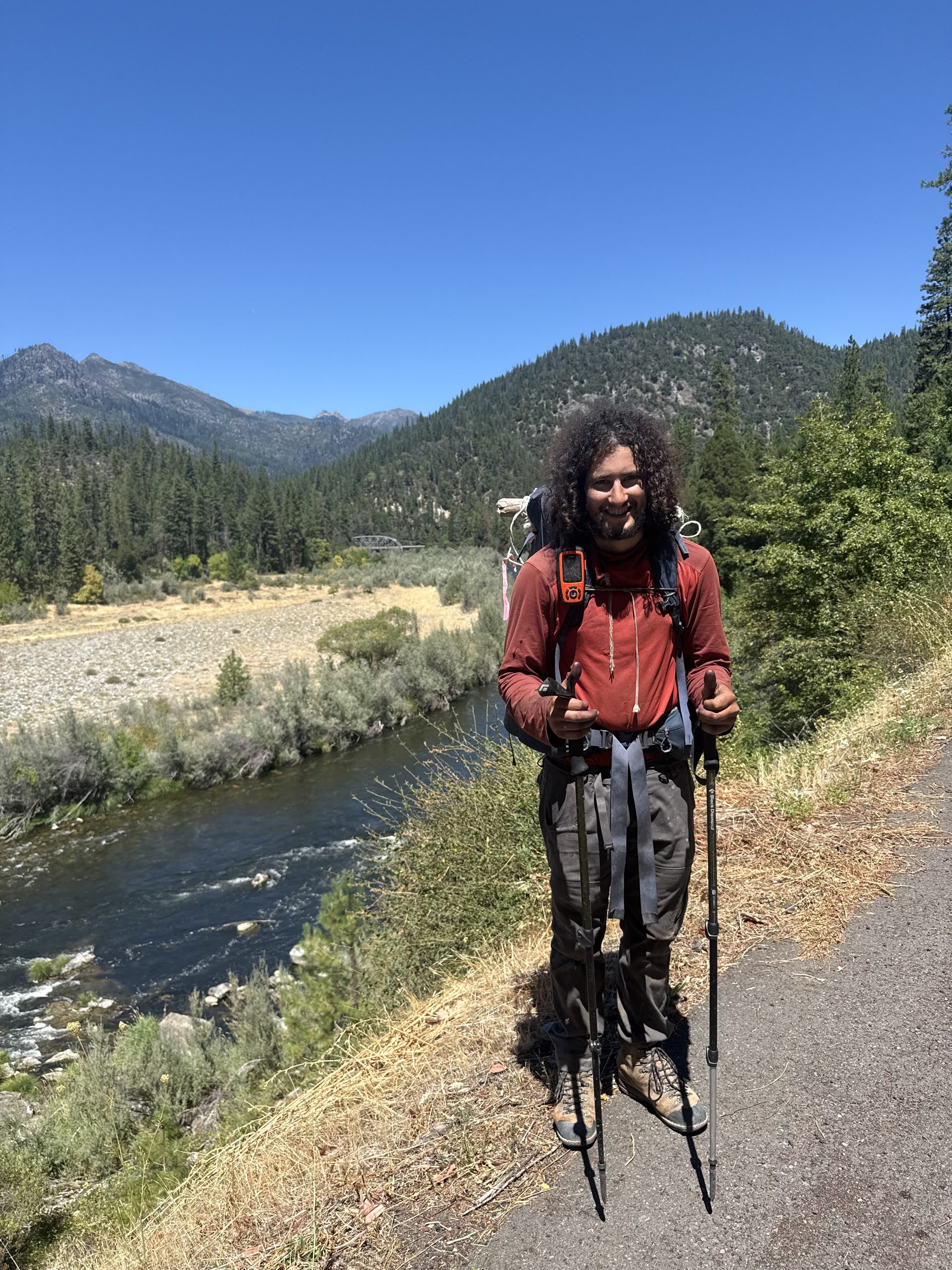
In the summer of 2026, Ryan completed the 360-mile Bigfoot Trail, traveling from the Yolla Bolly–Middle Eel Wilderness to the Pacific Ocean near Crescent City. Along the way, he took roughly twice as long as the typical thru-hiker, carrying scientific equipment, exploring remote side trails, and immersing himself in the remarkable biodiversity of the Klamath Mountains.
While the hiking world celebrates Fastest Known Times, Ryan may have established something entirely different: the Slowest Known Time.
And that might be the most fitting way to experience the Bigfoot Trail.
From Biology Student to Backcountry Explorer
Ryan, 32, grew up in Oceanside, California, and recently graduated from Cal Poly Humboldt with a degree in biology and an emphasis in ecology. After years of academic deadlines, he wanted something different.
The Bigfoot Trail offered an opportunity to reconnect with the natural world without the pressures of a schedule.
He first learned about the trail from Bigfoot Trail Alliance trail crew leader Jacob Shinners during a wilderness first responder course in 2024. After graduating in 2026, he finally had the time to take on the journey.
His preparations were unconventional, to say the least.
Ryan began training only a week or two before setting out. He took a bus to Red Bluff and, rather than arranging transportation to the southern trailhead, started walking.
Temperatures approached 105°F, and he quickly exhausted his six-and-a-half-liter water supply. Fortunately, a passing motorist stopped and refilled his bottles.
And then there was his backpack.
Fully loaded with food, water, and scientific equipment, it weighed approximately 70 pounds.
Among the contents were forestry measurement tools, a Kestrel weather meter, and an ultrasonic microphone designed to record bats.
Ryan wasn’t simply planning to hike through the Klamath Mountains. He wanted to study them.
Listening to the Night: A Trail of Bat Recordings
One of the most fascinating aspects of Ryan’s journey was his nightly bat monitoring.
Working with equipment provided by Cal Poly Humboldt bat biologist Joe Szewczak, Ryan carried an ultrasonic recording device capable of detecting the high-frequency echolocation calls that bats use to navigate and hunt.
Each evening, he attempted to deploy the microphone before sunset, often selecting campsites near lakes and other promising bat habitats.
The device automatically recorded short audio files whenever it detected sounds within a specified frequency range.
These recordings can later be analyzed using specialized software called SonoBat to help identify species and examine behaviors, including feeding activity.
For Ryan, this scientific curiosity became one of the primary reasons to travel slowly.
“The longer I stay in the wilderness, the more data I can collect,” he explained.
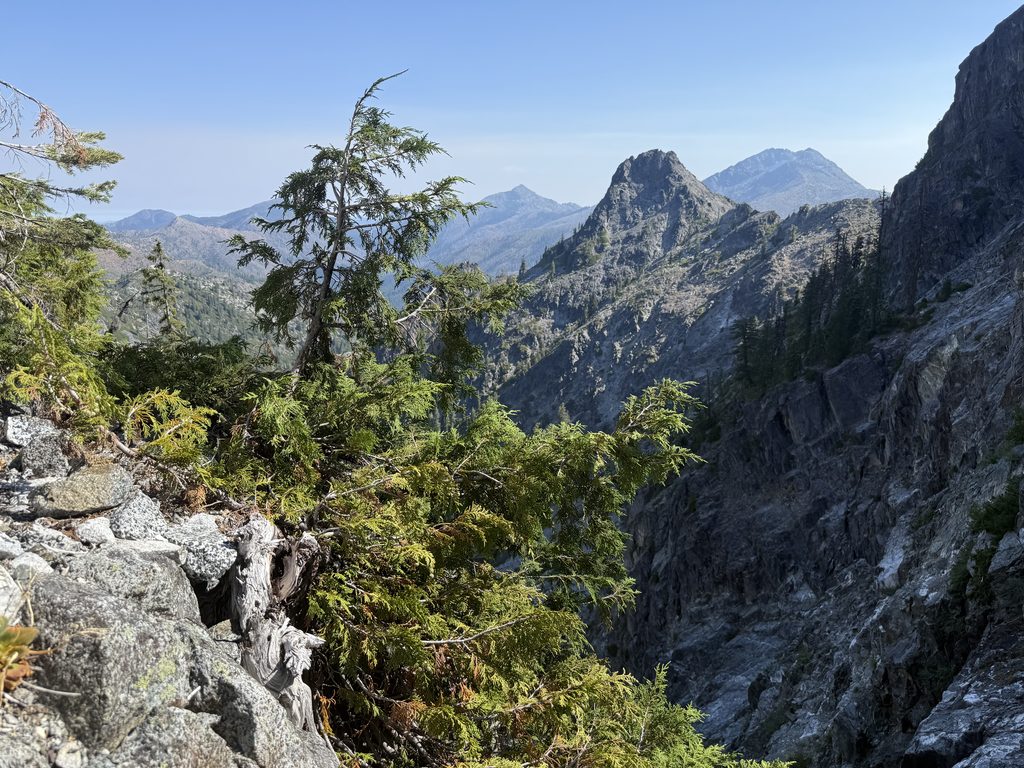
One particularly productive location was Smith Lake in the Trinity Alps Wilderness. After an exhausting bushwhack up Bear Gulch, Ryan reached the lake and set up his detector near its outlet. The site produced some of his most abundant bat recordings of the trip.
The recordings have yet to be fully analyzed, but Ryan hopes to work with Suzak to develop species lists associated with the locations he visited.
The results could offer an intriguing snapshot of bat activity across some of the Klamath Mountains’ most remote landscapes.
A Twelve-Hour Bushwhack and a Lake lined with Brewer Spruce
Ryan’s approach to the Bigfoot Trail included numerous detours into places most thru-hikers never see.
One of his most memorable adventures was a journey to Smith Lake in the Trinity Alps.
Leaving Morris Meadow, he climbed through Bear Gulch, encountering nearly impenetrable thickets of montane oak and other shrubs. At times, the vegetation towered above his head.
The journey took approximately 12 hours to cover just a few miles.
He nearly turned around.
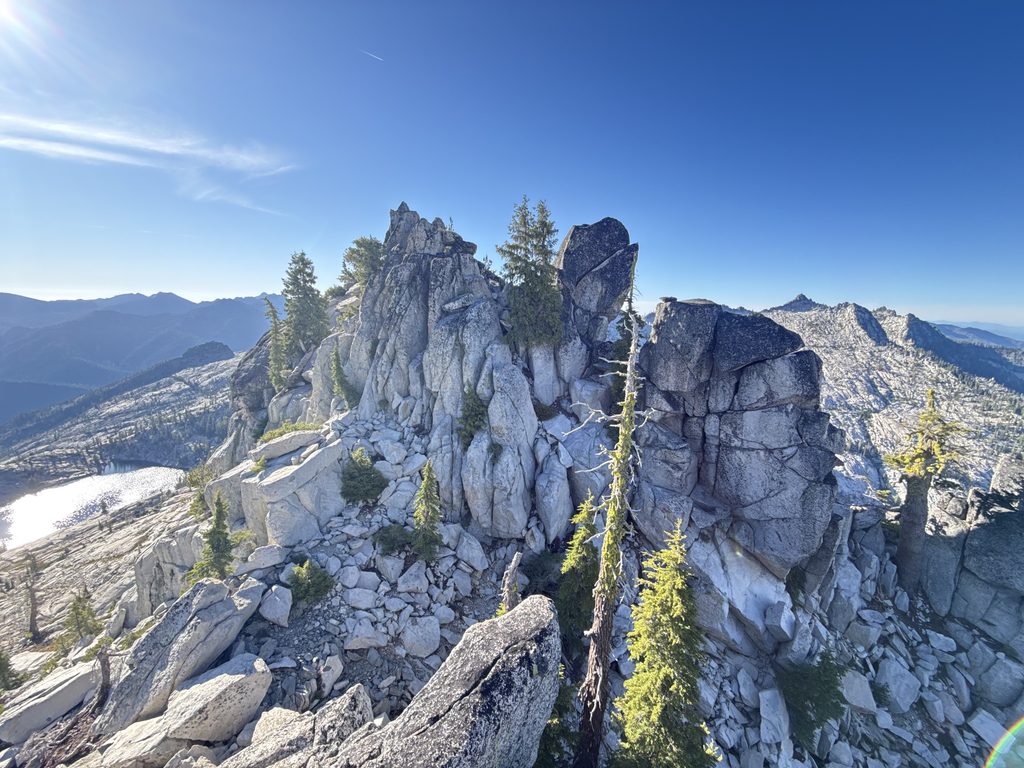
But eventually the brush gave way to granite, and Ryan emerged into the spectacular alpine basin surrounding Smith Lake.
There, he found a landscape dotted with Brewer spruce (Picea breweriana), one of the Klamath Mountains’ most distinctive endemic conifers.
Along the way, he also encountered his first Cascades frog and observed large tadpoles in small ponds near Morris Lake.
For an ecologist, these were the moments that made the difficult travel worthwhile.
Nine Conifers from One Spot
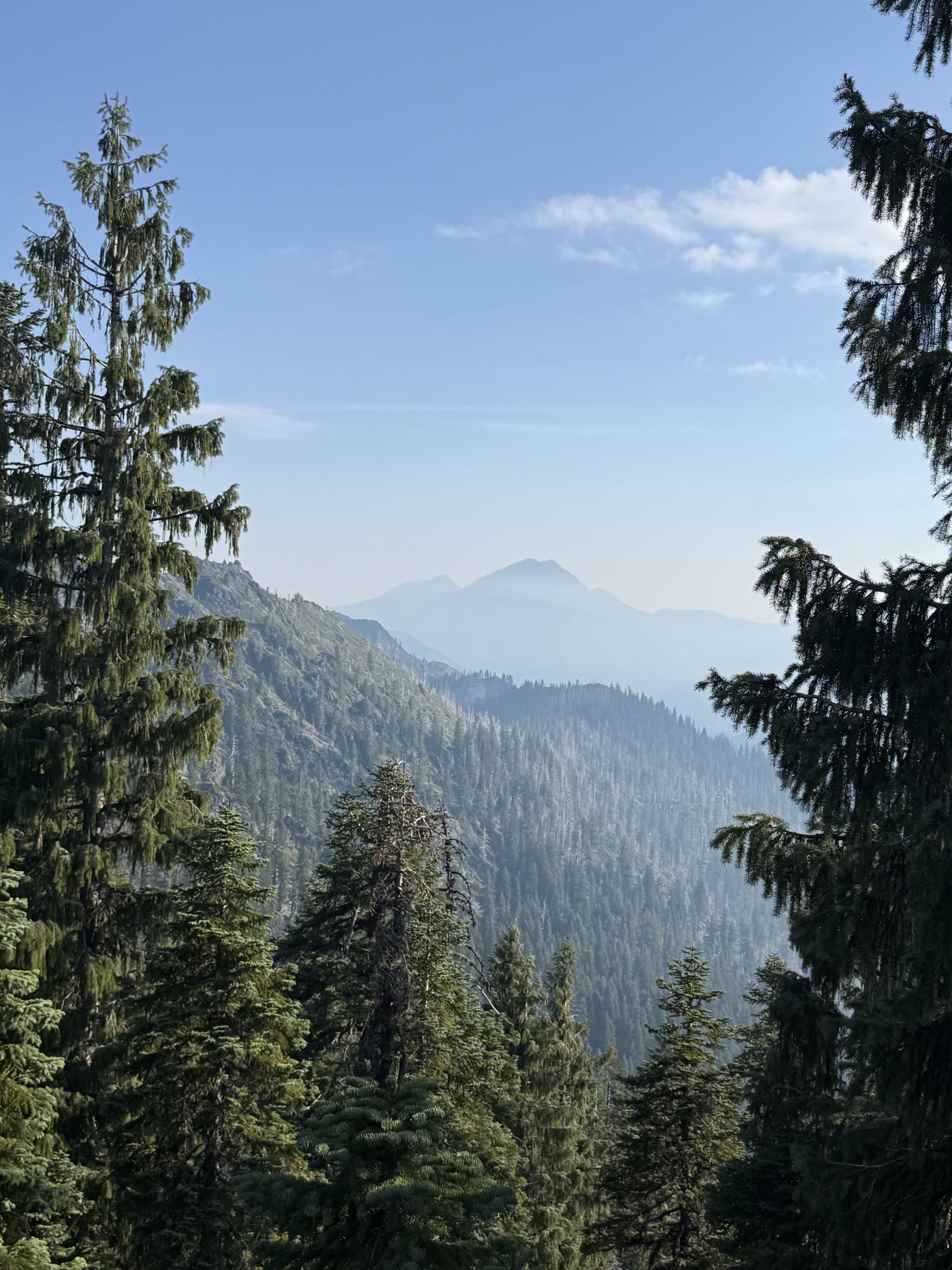
Another highlight came in the Russian Wilderness, where Ryan explored the extraordinary botanical landscape surrounding Russian Peak.
After reaching Russian Lake, he ventured to Bingham Lake, scrambled over Russian Peak, descended toward High Lake, and explored the ridges and basins near Eaton Peak and the Duck Lakes.
The route involved steep granite, difficult brush, and plenty of fallen trees.
But it also revealed one of the greatest botanical treasures of the Klamath Mountains.
Standing near the southern end of Big Duck Lake, Ryan counted approximately nine conifer species growing within view of a single location.
This remarkable diversity is part of what makes the Russian Wilderness and its celebrated Miracle Mile so special.
For Ryan, who had spent years studying ecology, the experience brought the lessons of the classroom to life.
Oatmeal, Crawfish, and Lessons in Backcountry Nutrition
Not every discovery was botanical.
Ryan’s early food planning was nearly as ambitious as his pack weight. He started with a large supply of oatmeal, much of it food he already had at home.
Before long, he could barely stomach another bite.
At one point, he recalled eating just two packets of oatmeal over an entire day, saving half his breakfast for dinner.
With inadequate calories and protein, his energy plummeted.
Near the South Fork Trinity River, he caught crawfish, boiled them, and ate them to supplement his dwindling food supply.
By the time he reached Hayfork, he was ready for a change.
He resupplied with instant mashed potatoes, ramen, beef jerky, and other more appealing trail foods. He also mailed home some of the scientific equipment he realized he didn’t need.
The oatmeal, however, remained a recurring character in his adventure, eventually becoming his emergency food.
When a Bear Steals Your Backpack
Perhaps Ryan’s most dramatic setback came in the Marble Mountain Wilderness.
While camping near Upper English Lake, he left his backpack unattended for approximately 30–45 minutes while retrieving his bat recording equipment.
When he returned, a bear was running away.
His backpack had been dragged from where he left it, the hip belt was torn, and the bear had punctured the fuel bottle for his backpacking stove.
Fuel had spilled onto his equipment, leaving his sleeping bag smelling of gasoline for days.
The damage forced Ryan to abandon his plans to continue through Wooley Creek. Instead, he returned to Etna to replace his backpack before resuming his journey.
For many hikers, such a setback might have been enough to end the trip.
For Ryan, it was another unexpected chapter in the adventure.
His experience is also an important reminder that food, fuel, and other scented items should be stored securely away from bears and other wildlife.
Reaching the Pacific—and Wishing the Trail Would Continue
After weeks of difficult trails, scientific observations, remarkable landscapes, and unexpected challenges, Ryan eventually reached Crescent City and the Pacific Ocean.
But the feeling wasn’t quite what he expected.
When his mother asked how it felt to finish the Bigfoot Trail, his answer was surprisingly simple:
“I was kind of bummed. I didn’t want to be done.”
After so much time immersed in the rhythms of the mountains, the destination almost seemed beside the point.
He had grown accustomed to days shaped by sunlight, weather, terrain, and curiosity. There were always more ridges to explore, more plants to identify, and more sounds to record after dark.
Even at the coast, Ryan wasn’t quite ready to stop wandering.
And he is already imagining another long walk, perhaps continuing north from Crescent City toward Port Orford, Oregon, through the Kalmiopsis Wilderness.
More Than a Thru-Hike
At the Bigfoot Trail Alliance, we often describe the Bigfoot Trail as an invitation to take a thorough hike.
The route connects some of the most biologically diverse landscapes in North America. It is challenging, remote, and sometimes difficult to follow. But it also rewards those willing to look closely.
Ryan’s journey embodies that spirit.
Congratulations, Ryan, on an extraordinary journey—and thank you for reminding us that the Bigfoot Trail is not a race to the finish.
Leave a Reply