
The Marble Mountain Wilderness is a landscape of remarkable contrasts—deep river canyons, high granite basins, ancient forests, open meadows, and rugged ridgelines. It is also home to some of the most important miles of the Bigfoot Trail.
Throughout 2026, Bigfoot Trail Alliance crews and volunteers returned again and again to the Marble Mountains, working from early spring into summer to reopen trails, remove fallen trees, brush overgrown corridors, and reconnect long stretches of the wilderness trail system.
Across eight projects, BFTA crews worked 78.6 miles of trail and removed 707 fallen trees. Volunteers contributed nearly 1,000 hours alongside our seasonal crews and project leaders.
This work was possible because of strong partnerships with the Klamath National Forest and Six Rivers National Forest. We are deeply grateful to Forest Service staff for providing funding and logistical support, helping identify priorities, and—just as importantly—working alongside us in the field. Maintaining wilderness trails at this scale is collaborative work, and we appreciate the trust and partnership that make it possible.
Wooley Creek | Six Rivers National Forest
March 23–29 | 9.5 miles | 49 trees removed
Our Marble Mountains season began early, with a BFTA crew heading into the Wooley Creek country in late March. Over seven days, the crew worked 9.5 miles of trail and cleared 49 downed trees, getting an early start on opening this important corridor into the wilderness.
We had hoped to push deeper into the Wooley Creek drainage, but after a dry winter, several springs we depend on for backcountry water were already dry. Without reliable water sources, the crew had to turn back sooner than planned. The work isn’t finished, though: we’re planning another trip this fall and additional work in 2027 to continue opening this spectacular and remote trail corridor
BFTA seasonal crew project
Let’r Buck | Six Rivers National Forest
April 27–May 1 | 2.5 miles | 45 trees removed
A month later, our crew returned to the Six Rivers side of the wilderness to work the Let’r Buck Trail. In just a few days, they cleared 45 trees from 2.5 miles of trail—a reminder that mileage alone never tells the full story of trail work in the Klamath Mountains.
BFTA seasonal crew project
Stanshaw Youth Project | Six Rivers National Forest
May 23–25 | 7.5 miles | 20 trees removed | 24 volunteer hours
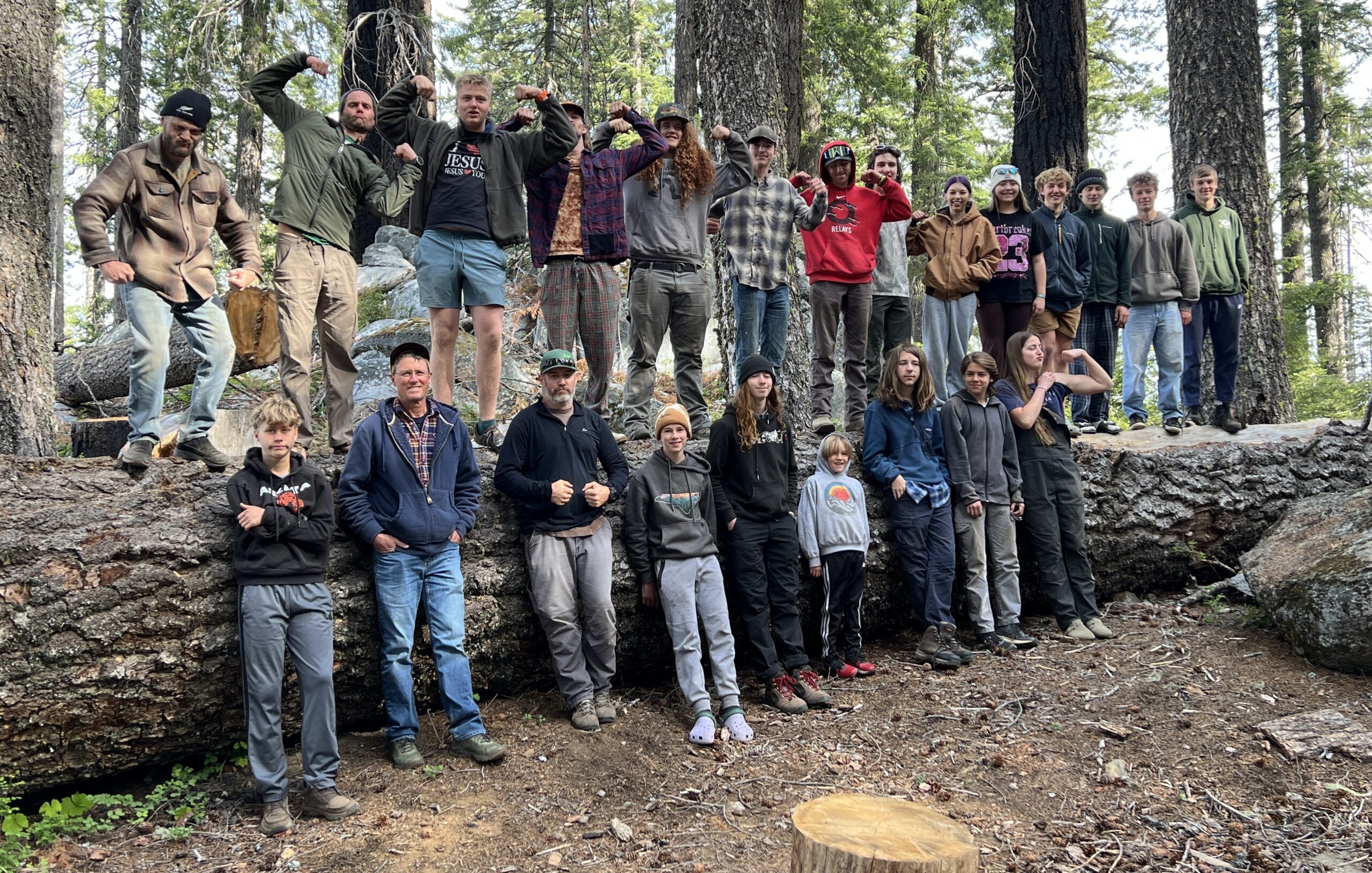
In late May, our work shifted to the Stanshaw area for a youth-focused project. The crew worked 7.5 miles of trail and removed 20 trees, with one volunteer contributing 24 hours to the effort.
Projects like this connect trail stewardship with another central part of BFTA’s mission: helping people build relationships with these landscapes through meaningful work.
Volunteer-supported project — 1 volunteer contributing approximately 24 hours plus 18 youth engaged
Marble Valley–Wooley | Klamath National Forest
May 28–June 9 | 18 miles | 220 trees removed
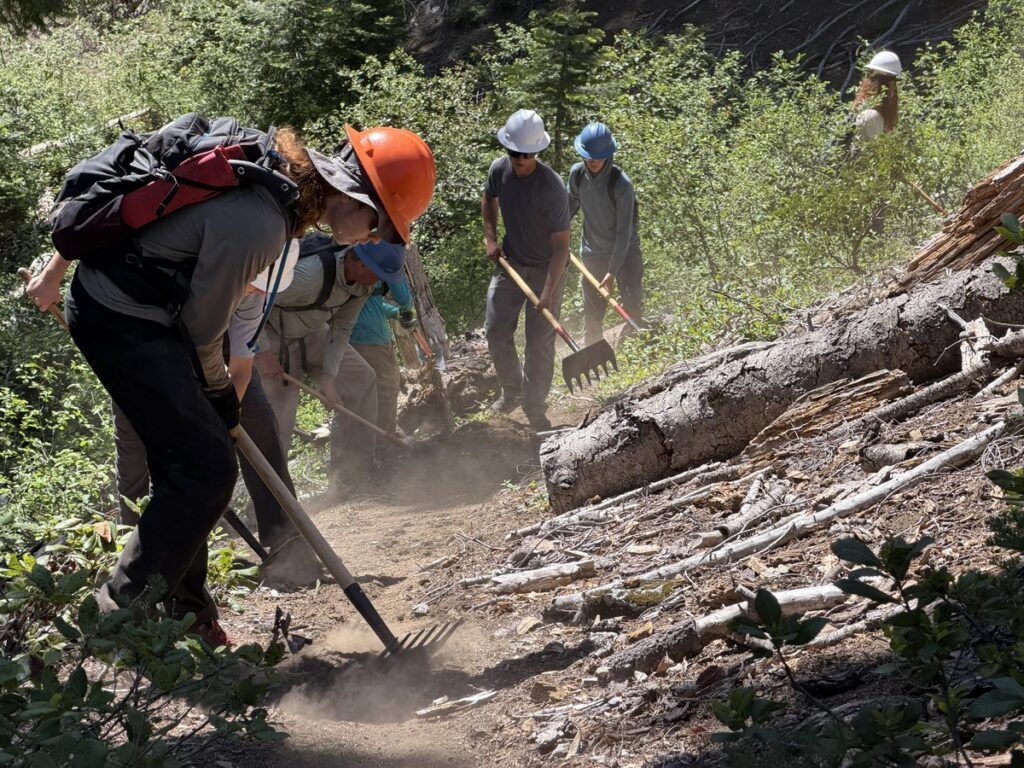
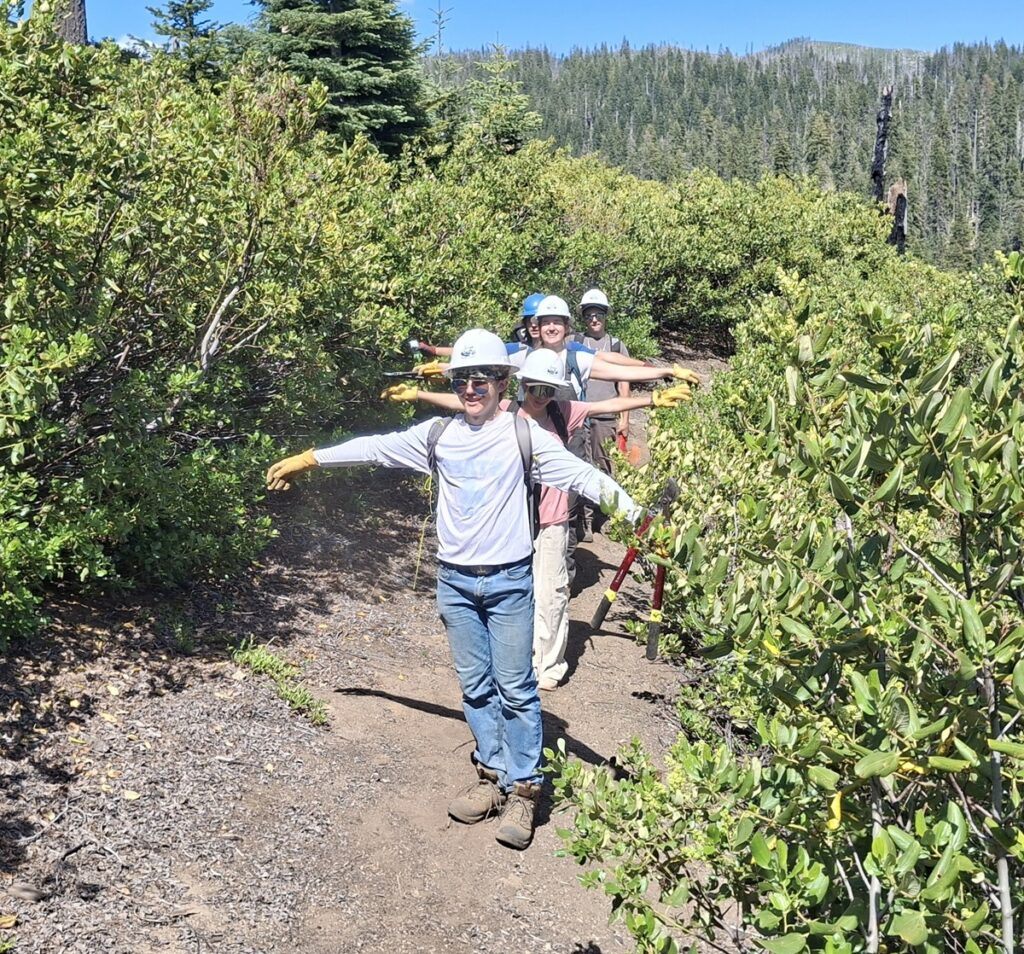
One of our largest hitches of the season connected the Marble Valley and Wooley country. Over nearly two weeks, the crew worked an impressive 18 miles of trail and removed 220 fallen trees.
This remote country demands long approaches, heavy packs, crosscut saws, and plenty of patience. Opening 18 miles through the heart of the wilderness was one of the major accomplishments of our season.
BFTA seasonal crew project
Etna Summit to Little North Fork | Klamath National Forest
June 30–July 9 | 33 miles | 171 trees removed
Our longest stretch of trail work this year extended from Etna Summit toward the Little North Fork. Over ten days, crews covered 33 miles of trail, removing 171 trees along the way.
Keeping these long-distance routes connected is especially important on the Bigfoot Trail, where a single badly overgrown or heavily logged section can make an otherwise passable route extraordinarily difficult.
BFTA seasonal crew project
Upper Abbotts | Klamath National Forest
July 4–10 | 2 miles | 67 trees removed | 504 volunteer hours
Some trail miles come slowly. Upper Abbotts was one of those places.
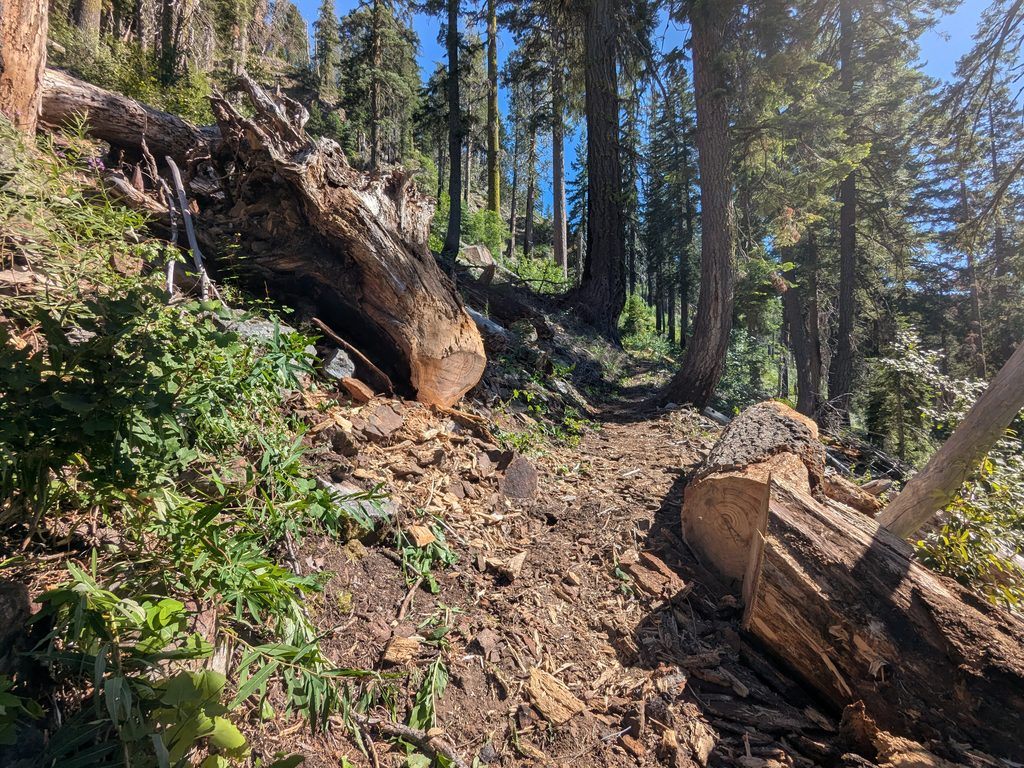
Nine volunteers contributed an extraordinary 504 hours while working just two miles of trail and removing 67 trees. That concentration of effort speaks to the challenging conditions crews encountered and the persistence required to bring neglected wilderness trails back to life.
Volunteer project — 9 volunteers contributing approximately 504 hours.
Hamilton Camp | Klamath National Forest
July 4–10 | 2.8 miles | 41 trees removed | 448 volunteer hours
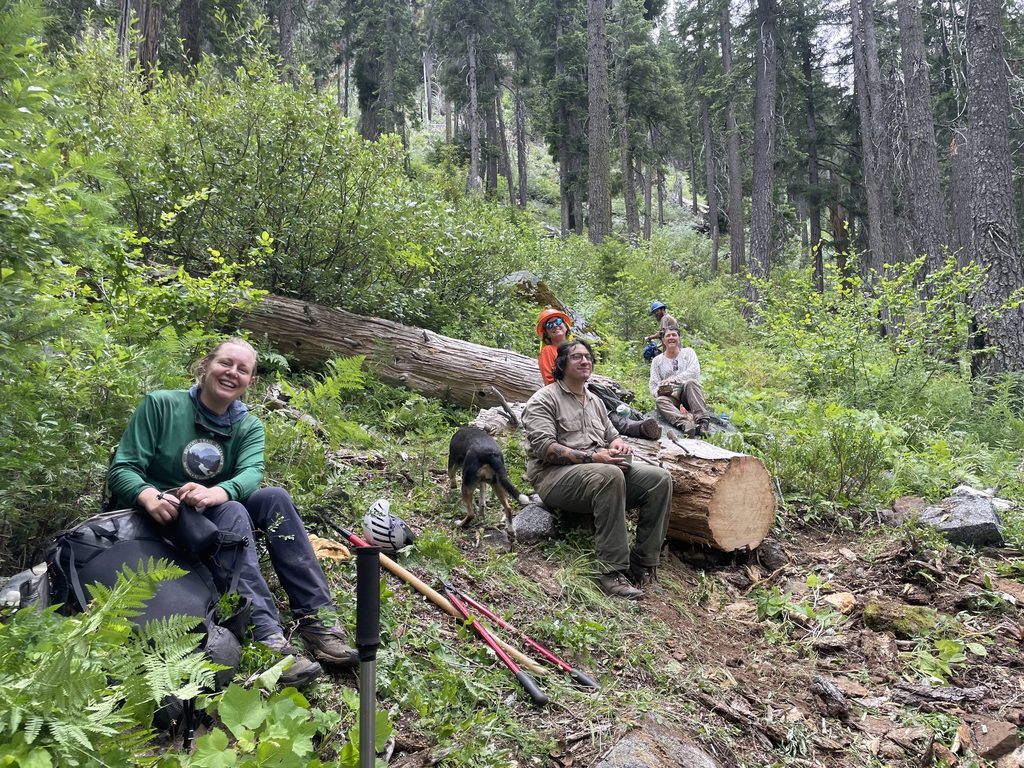
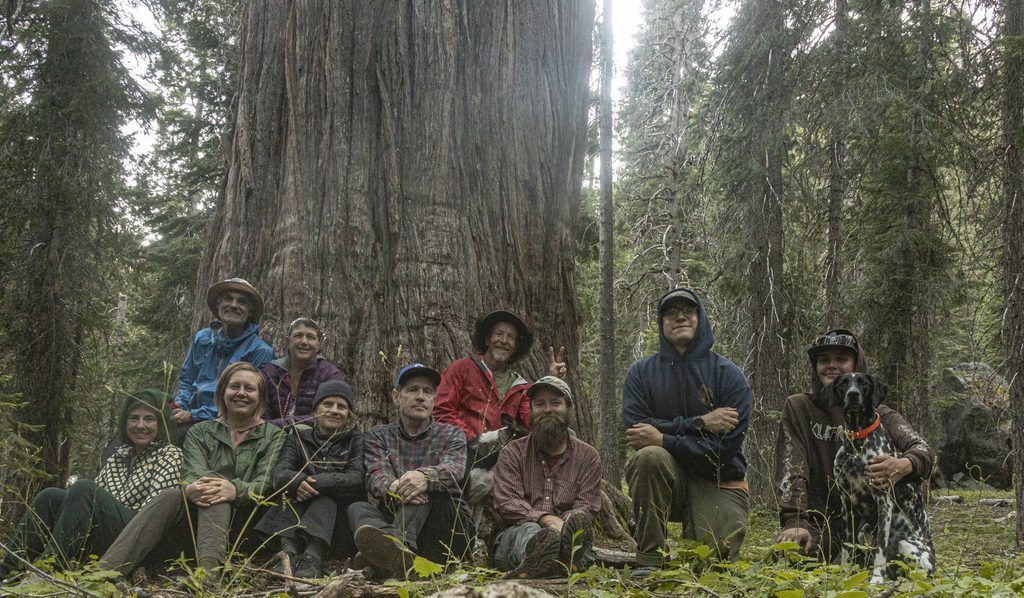
At the same time, another volunteer effort focused on the Hamilton Camp area. Eight volunteers contributed approximately 448 hours, working 2.8 miles and removing 41 trees.
Together, the Upper Abbotts and Hamilton Camp projects represented nearly 1,000 hours of volunteer stewardship in a single week—an extraordinary gift of time and energy to the Marble Mountains.
Volunteer project — 8 volunteers contributing approximately 448 hours.
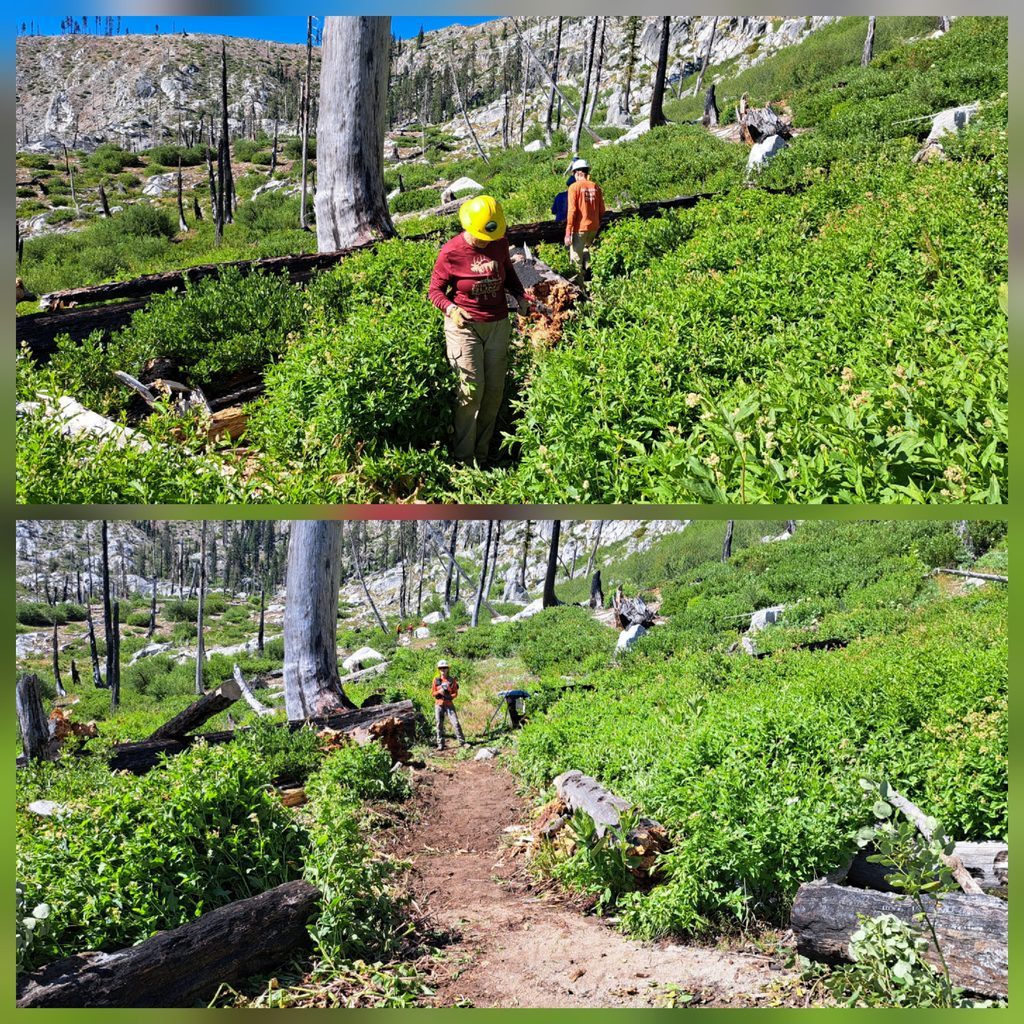
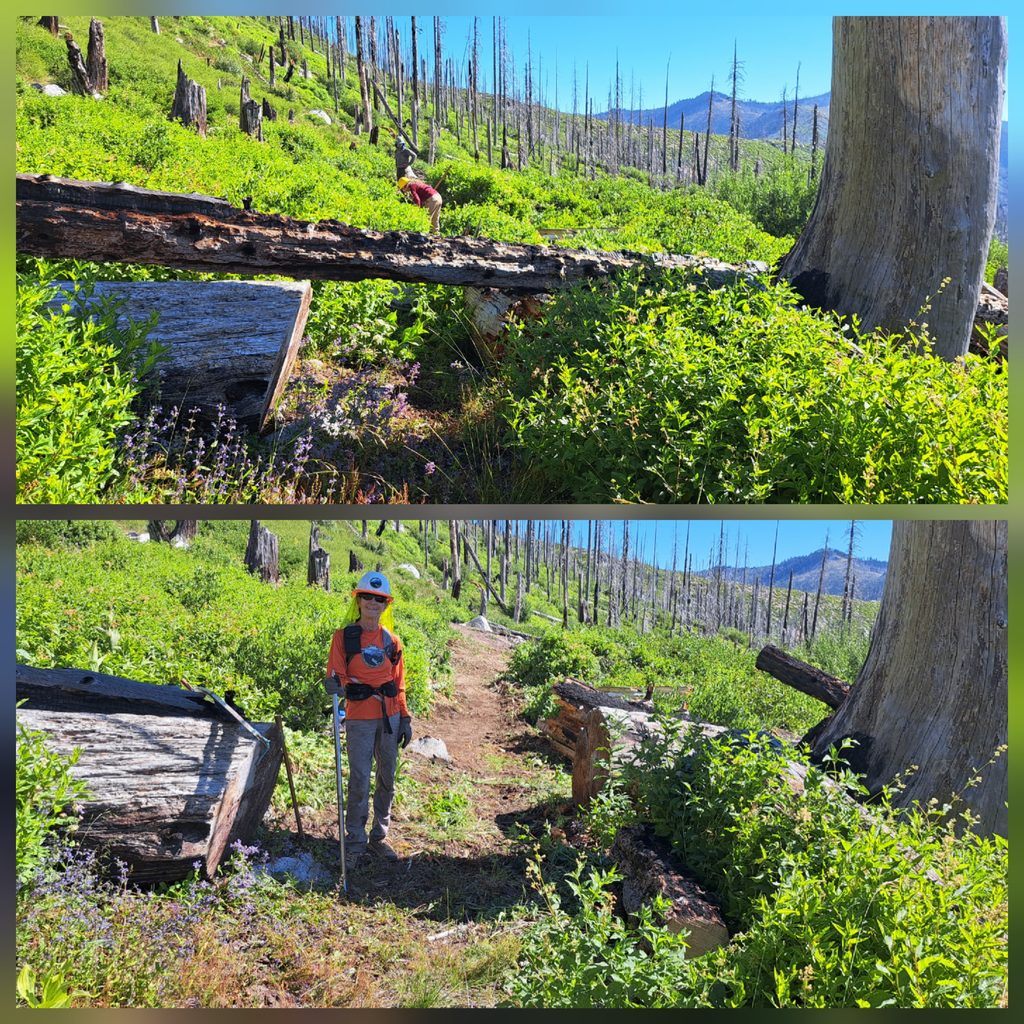
Many Hands, One Wilderness
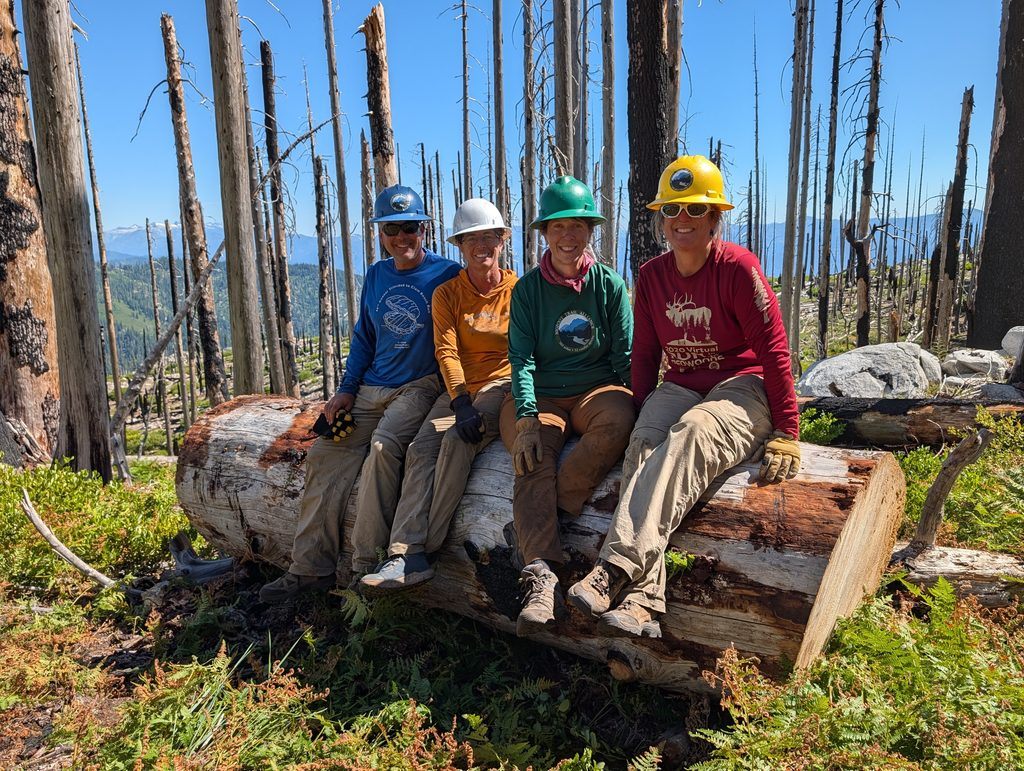
Taken together, these projects tell a larger story. Trails do not remain open on their own. In a landscape shaped by wildfire, winter storms, vigorous vegetation, steep terrain, and time, keeping a wilderness trail passable requires people willing to return year after year.
And again, our thanks go to the staff of the Klamath and Six Rivers National Forests. Their financial support, knowledge of these landscapes, logistical assistance, and willingness to work shoulder-to-shoulder with our crews are essential to what we accomplish.
About the Map
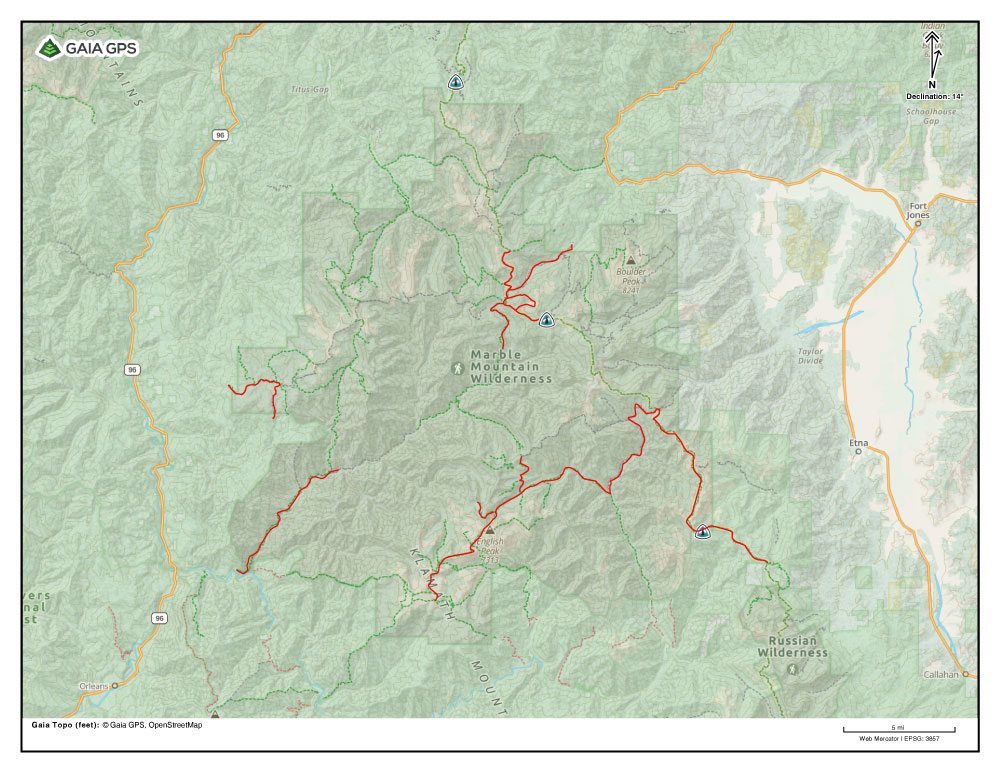
The accompanying map shows Bigfoot Trail Alliance’s 2026 trail work in the Marble Mountain Wilderness only. It does not represent all of the trail maintenance completed in the wilderness this year.
Forest Service crews and other trail organizations also completed important work across the Marble Mountains, and we want to recognize that broader effort. Our hope is that in future years we can work with our partners to develop a unified annual stewardship map showing the collective trail work accomplished across the wilderness.
Leave a Reply