
Bigfoot Trail: Route Conditions, Safety, and Disclaimer
The Bigfoot Trail is a challenging, remote, and often rugged route through the Klamath Mountains of northwest California and southwest Oregon. Established as a proposed long-distance hiking route, it connects existing trails, backcountry roads, and public lands across one of the most biologically diverse temperate coniferous forests on Earth.
The Bigfoot Trail is not a continuously maintained or consistently marked trail. While some sections are well-established and relatively easy to follow, others can be extremely difficult, with overgrown vegetation, fallen trees, damaged tread, challenging creek crossings, and sections where the original trail is difficult to locate. Wildfires, winter storms, and years of deferred maintenance have significantly affected portions of the route.
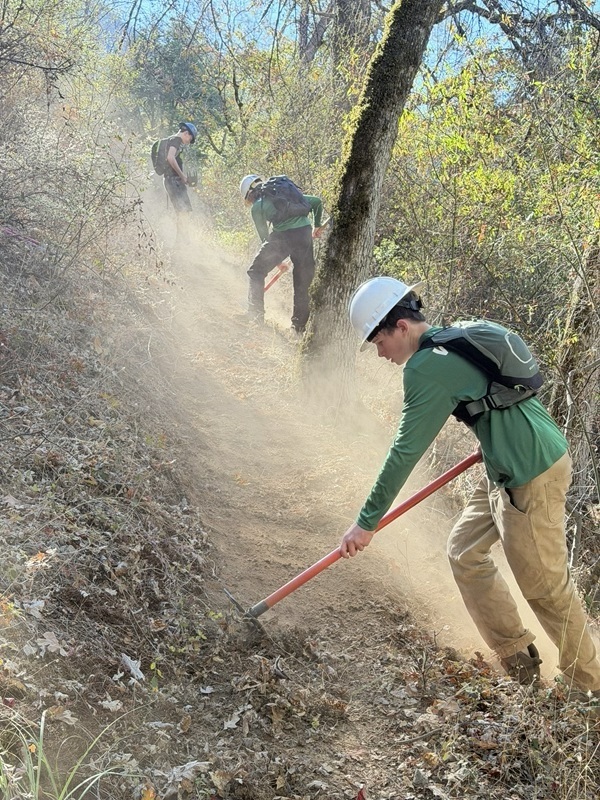
The Bigfoot Trail Alliance is actively working to restore and maintain this route, organizing volunteer crews, seasonal trail crews, and partnerships with the U.S. Forest Service and other organizations. Each year, we clear fallen trees, brush overgrown corridors, repair damaged tread, and reopen neglected trails. This work is physically demanding, expensive, and time-consuming, particularly in remote wilderness areas that can require days of hiking simply to reach a work site.
Although we are making meaningful progress, the scale of the work is immense. Federal land management agencies face limited budgets, staffing shortages, and competing priorities, and many of the remote trails that make up the Bigfoot Trail are not always priorities for Forest Service maintenance. As a result, trail conditions vary considerably, and hikers should not assume that any particular section has been recently maintained or is readily passable.
Know Before You Go
The Bigfoot Trail is best approached as a wilderness adventure that requires preparation, flexibility, strong navigation skills, and a willingness to encounter difficult conditions. It is not a conventional, fully maintained long-distance trail. Hikers should be prepared to navigate around obstacles, travel slowly through overgrown sections, and adjust their plans when conditions warrant.
The route description, maps, GPS tracks, and other information provided on this website are intended as planning resources, not guarantees of safe or unobstructed passage. Conditions in the field can change quickly due to wildfire, storms, flooding, landslides, and other natural events. The inclusion of a particular trail, road, or creek crossing does not constitute an endorsement of its current condition or safety.
Anyone choosing to hike the Bigfoot Trail does so voluntarily and assumes responsibility for their own safety, preparation, navigation, and decisions in the field. The Bigfoot Trail Alliance makes no guarantee regarding the accuracy, timeliness, completeness, or suitability of the information provided and assumes no responsibility for its use or misuse.
Our Vision
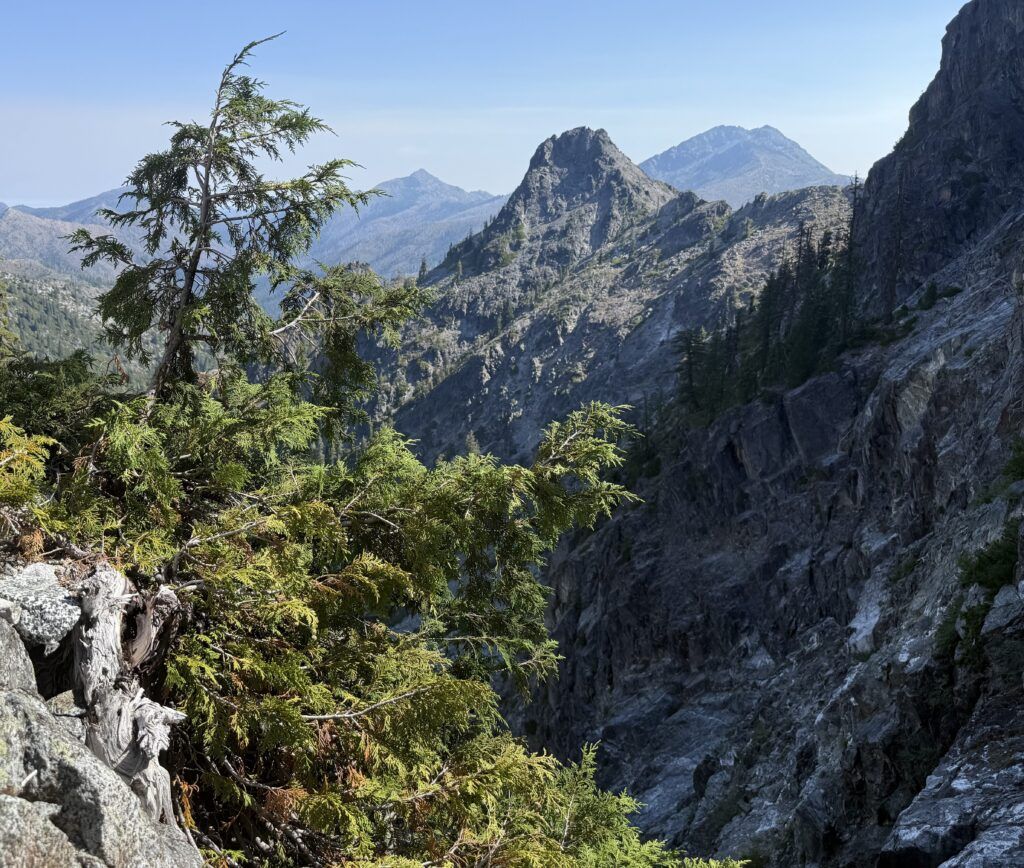
We believe the Bigfoot Trail offers something increasingly rare: an opportunity to experience the wild heart of the Klamath Mountains while developing a deeper understanding of their extraordinary botanical and ecological diversity.
Through trail stewardship, education, and community partnerships, we are working toward a future in which these historic routes remain accessible, sustainable, and connected to the landscapes they traverse. Every mile restored represents progress, but maintaining a route of this scale is a long-term commitment that depends on dedicated volunteers, generous supporters, and strong public-land partnerships.
Come prepared for an adventure, expect challenging conditions, practice Leave No Trace ethics, and above all, do this hike for the plants!